
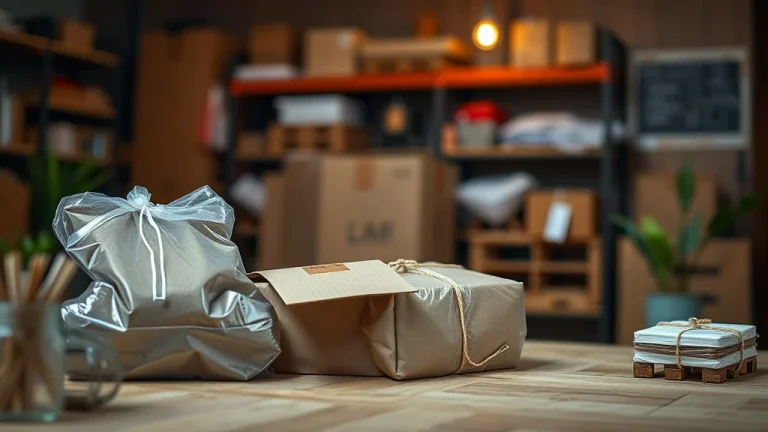
How to Pack Fragile Items for Shipping: The Complete Guide
Packing fragile items for shipping demands a new double-walled corrugated box, a minimum 5cm cushioning layer on all six sides, cardboard dividers between multiple items, and a clearly visible “Fragile” label applied to at least three faces of the parcel. These four elements, applied in the correct sequence, reduce transit breakage rates sharply — whether you’re sending glassware, ceramics, antiques, or delicate electronics.
I’ve worked closely with courier networks for years, and the pattern repeats without exception: broken parcels don’t arrive damaged because the sender was careless — they arrive damaged because the wrong materials were used, or the correct sequence was skipped. A recycled shoebox instead of a fresh corrugated carton. Balled-up newspaper instead of bubble wrap. These decisions compound into costly, avoidable outcomes.
Research consistently shows that 34% of e-commerce returns stem from damage incurred during shipping — a figure that hits small sellers and large retailers with equal force. Glass and ceramic items account for a disproportionate share of transit damage claims. A single mishandled sort at a regional distribution hub can subject a parcel to a 50kg drop-force impact, which is why cushioning thickness, not wrapping alone, governs whether an item survives. Bubble wrap and polystyrene packing peanuts function as a force-absorption layer, converting sudden kinetic energy into distributed pressure across the item’s surface — a mechanism that balled-up newspaper physically cannot replicate.
What Items Qualify as Fragile for Shipping Purposes
Fragile items suffer structural failure, surface damage, or functional loss when exposed to impact, vibration, compression, or temperature change during transit. The category extends further than most senders assume.
| Item Type | Primary Risk | Recommended Cushioning |
|---|---|---|
| Glassware & crystal | Impact fracture | 5cm+ bubble wrap + polystyrene lining |
| Ceramics & crockery | Chip on rim or base | Cardboard dividers + 5cm foam |
| Electronic devices | PCB damage, screen crack | Anti-static foam + double box |
| Antiques & artwork | Surface abrasion, structural stress | Acid-free tissue + rigid outer frame |
| Mirrors & lampshades | Corner breaks | Corner protectors + 7cm+ cushioning |
| Jewellery | Clasp breakage, stone loss | Padded jewellery box inside rigid box |
Artwork, mirrors, and lampshades carry the highest claim rates because their geometry — large surface area, thin cross-section — creates structural vulnerability at corners and edges. I always wrap these items individually in acid-free tissue before applying bubble wrap, because direct contact between synthetic foam and gilded or lacquered surfaces causes surface lift over a 48-hour journey.
How to Package a Fragile Parcel: Box Selection and Preparation
A fragile parcel requires a new double-walled corrugated box, a minimum 5cm cushioning buffer on all six internal faces, and a tamper-proof tape seal along every seam and opening.
Utilize an outer container certified to a minimum Edge Crush Test (ECT) rating of 48 lbs/in or a 325 lb Bursting Test standard, ensuring the double-wall corrugated construction contains BC-flute geometry. Select a box that accommodates your item plus 5cm of cushioning on every side — not so spacious that contents shift freely, but not so tight that wrapping compresses against the wall.
Avoid reusing old boxes without exception. A second-hand delivery carton carries weakened structural integrity at the folds and corners — precisely the points that absorb the most stress during drops and stack pressure. Good-quality packaging is available from most Post Office branches and specialist packaging suppliers.
| Box Type | Structural Strength | Recommended Use |
|---|---|---|
| Single-wall corrugated | Low–Medium | Light, non-fragile items only |
| Double-wall corrugated | High | Glassware, ceramics, electronics |
| Triple-wall corrugated | Very High | Heavy or extremely fragile items |
| Reused cardboard box | Degraded | Not recommended for fragile goods |
Box selection governs the cushioning sequence that follows — every subsequent step assumes a structurally sound outer shell.
How to Wrap Fragile Items Correctly
Wrapping fragile items correctly requires at least two distinct layers of bubble wrap — small-bubble first, large-bubble second — secured with sticky tape on every pass.
The dual-layer method works because each bubble diameter addresses a different energy range: small-bubble wrap absorbs localised surface impacts; large-bubble wrap absorbs higher-energy forces and increases the item’s overall diameter for a snug fit inside the box.
Here is the wrapping method I use and recommend for every shipment:
- Apply small-bubble wrap first — wrap it tightly around the entire item, covering every surface including the base, then secure with clear tape
- Add large-bubble wrap as a second layer — this increases both cushioning depth and resistance to higher-energy impacts
- Roll irregular items such as ceramic figurines through multiple bubble wrap layers rather than attempting to fold the material around them
- Insert rigid cardboard dividers between multiple items sharing one box — even individually wrapped items fracture each other on contact impact
Surround each wrapped item with at least 5cm of cushioning on every face — top, bottom, and all four walls. Place polystyrene peanuts or foam inserts into all remaining voids after the item is positioned.
Materials that protect:
- Bubble wrap — small and large bubble variants
- Polystyrene packing peanuts or foam chips
- Foam inserts or custom-cut foam pads
- Rigid cardboard dividers for multi-item shipments
- Strong packing tape, minimum 48mm width
Materials that fail:
- Balled-up newspaper — compresses under minimal pressure, absorbs almost no impact energy
- Air-pillow fillers — puncture easily on conveyor systems, providing zero protection once deflated
Research into parcel damage claims confirms that the majority of breakages occur at corners and edges, not flat box faces — which is why corner-wrapping technique and void-fill density at the base and lid matter more than most senders account for.

The Three Principles That Govern Breakage Prevention
Breakage prevention rests on three physical principles: immobilisation, absorption, and containment — applied simultaneously, not sequentially.
| Principle | Method | Material |
|---|---|---|
| Immobilisation | Eliminate item movement inside the box | Cardboard dividers, foam inserts, polystyrene chips |
| Absorption | Cushion impacts and vibration | Bubble wrap, polystyrene peanuts, foam chips |
| Containment | Maintain outer box structural integrity | Double-walled box, strong tape on all seams |
From our experience processing fragile parcels daily, foam enclosures cut to the exact shape of the item deliver the highest level of protection for irregular or high-value objects — they eliminate movement entirely, which is the primary cause of in-transit breakage. The cost differential over standard bubble wrap is negligible against the replacement value of a broken antique or electronic component.
The Complete Packing Sequence: Step by Step
The correct packing sequence applies layered physical barriers in a fixed order — cutting any step increases damage probability at every subsequent handling event.
- Line the box base — lay 5cm of polystyrene chips or a foam sheet at the base before introducing the item
- Wrap the item in small-bubble wrap — cover all faces including the base, secure with clear tape at every turn
- Add large-bubble wrap as the second layer — this absorbs higher-energy impacts and creates diameter for a snug box fit
- Position the item centrally — the wrapped item must sit at the box’s geometric centre with no face touching any box wall
- Fill all voids — pack polystyrene chips around and above the item until the box is full with zero movement; shake the sealed box to verify
- Seal all edges — use the H-tape method across the top seam, base seam, and all four vertical edges
- Label all faces — apply Fragile stickers to the top and at least two sides; apply the address label to the top face only
Additional pre-shipment checks I run through for every fragile parcel:
- Flatten any sharp staple edges or metal fastenings and cover with tape
- Write a return address on the outside of the parcel
- Include a contact name, address, and phone number inside the box
- Photograph the packed and sealed parcel before dispatch — this evidence governs any future damage claim
The “Fragile” Label: Function, Placement, and Limits
A clearly placed “Fragile” label increases the probability of careful handling at every manual sortation point in the delivery network.
Research published by packaging engineers demonstrates that visibly labelled parcels receive measurably more careful handling at sorting facilities, particularly during the final-mile stage where manual intervention peaks. The label does not guarantee care, but it creates a documented handler obligation — and, critically, it supports insurance claims by evidencing that the sender flagged the item’s nature.
Attach the label to a minimum of three faces — top, front, and at least one side. Handlers and automated conveyor systems interact with parcels from every angle; a single top label faces downward on a conveyor belt and becomes invisible. The vast majority of parcel damage occurs not during long-haul transit but at automated sorting hubs — making the label most effective at collection points and delivery depots where human handlers physically touch the box.
Use self-adhesive labels rather than hand-written marker. Ink smudges and fades on damp cardboard during transit. Stick labels flat with no air bubbles underneath — a peeling sticker on a wet surface is functionally invisible.

Double Boxing: When It Applies and How to Execute It
Double boxing places a fully packed inner box inside a second, larger outer box separated by 5–7cm of cushioning on all six faces — the method standard practice demands for high-value electronics, antiques, and items exceeding £200 in declared value.
The outer box absorbs external compression and impact loads from conveyor systems. The inner box maintains the item’s position independent of outer box deformation. I’ve found this approach particularly effective for ceramic sculptures and vintage audio equipment, where a single corrugated shell simply cannot absorb the lateral forces generated at automated sorting hubs.
Double-boxing execution:
- Select a new double-walled corrugated outer box — reused boxes lose structural integrity after the first use
- Use custom-cut foam inserts to immobilise the item inside the inner box
- Ensure 5–8cm of packing peanuts or foam sheet separates every face of the inner box from the outer box walls
- Apply reinforcement tape across every seam and flap on both boxes
- Label the outer box Fragile on a minimum of three faces
- Include a return address and contact number inside the package
Double boxing adds weight and marginally increases postage cost, but that differential is negligible compared to the replacement value of a broken item or a voided insurance claim. In our experience with specialist fragile freight, double boxing reduces damage claims to near-zero on items that would otherwise carry significant risk.
Carrier Comparison for Fragile Item Shipments
Carrier choice determines both the handling protocol applied to fragile consignments and the maximum compensation recoverable if damage occurs.
| Carrier | Fragile Item Guidance | Compensation Cover | Specialist Option |
|---|---|---|---|
| Royal Mail | Detailed guidance published | Varies by service tier | Tracked + Signed; Special Delivery |
| Parcelforce | Standard fragile guidelines | Up to £100 standard | Enhanced cover available |
| DPD | Prohibited items list applies | Declared value cover | No dedicated fragile tier |
| Evri (Hermes) | Basic guidance only | Limited | Not recommended for high-value fragile items |
| UPS | Full fragile packaging spec | Declared value | UPS Pack & Ship service |
Always verify current terms directly with your chosen carrier before dispatch.
For high-value or irreplaceable items, request a signature on delivery to confirm safe receipt, and use a specialist courier experienced in fragile consignments rather than standard letter-post services. Access locker and hub locker services add security at the delivery end — they reduce the number of handling events and eliminate doorstep exposure, both of which lower breakage risk.
Shipping Insurance for Fragile Items
Shipping insurance covers the declared value of a fragile item against loss or damage in transit and becomes financially rational the moment an item’s replacement cost exceeds the insurance premium.
For domestic UK shipments, Royal Mail’s standard compensation covers up to £20 on second-class services, rising to £100 on standard tracked services, and up to £750 on Special Delivery Guaranteed — with optional declared-value cover extending to £2,500. Anything above the baseline threshold warrants add-on cover.
For international shipments, the calculus shifts substantially. Items shipped via air, sea, or road across multiple jurisdictions pass through more handling points and face customs inspection — both of which multiply contact-damage risk. The average international parcel changes hands between 7 and 12 times between sender and recipient, compared to 3–5 times for domestic UK deliveries, with each handoff representing a fresh damage opportunity. We recommend declared-value insurance for any fragile item valued above £50 on an international route.
Key insurance requirements:
- Photograph the item, the internal packing arrangement, and the sealed box before dispatch — carriers require this evidence to process damage claims
- Retain all receipts and proof of value for antiques, electronics, and jewellery
- Check whether the carrier’s policy excludes items that were not “adequately packed” — inadequate cushioning voids most claims regardless of fault
Royal Mail’s packaging guidance explicitly states that fragile items must not contact the sides of the container and must be surrounded by a minimum of 5cm of cushioning on all faces — failure to meet this standard invalidates compensation.

International Shipments: Additional Precautions
International fragile shipments multiply contact-damage risk because they travel further, change hands more frequently, and pass through customs inspection — each stage introducing fresh handling variables.
Air freight subjects packages to rapid pressure and temperature cycling. Sea freight introduces extended vibration and humidity exposure. Both routes demand additional preparation beyond the domestic standard.
Additional steps for international fragile shipping:
- Use moisture-barrier inner wrapping — polythene sheeting — for sea freight routes
- Include a printed packing list inside the box describing contents clearly, for customs purposes
- Declare accurate item value on customs forms — under-declaration voids carrier insurance
- Choose tracked, signed-for services to maintain a custody chain if damage occurs
- Purchase declared-value insurance for any fragile item exceeding £50 in value
Frequently Asked Questions
How Do You Protect Your Fragile Item During Shipping?
When shipping fragile items, it is crucial to pack them properly to ensure they reach their destination safely. To do this, use materials like bubble wrap and sturdy boxes to provide adequate protection. Add extra cushioning to absorb any shocks during transit and secure the items to prevent shifting. Clearly label the package as fragile to alert handlers to handle it carefully. These steps ensure that your delicate items arrive intact and undamaged.
What Is the Best Way to Ship Very Fragile Items?
When shipping highly fragile items, it’s crucial to use strong boxes and ample cushioning, such as bubble wrap or packing peanuts. Opt for double boxing with customised inserts for an extra layer of protection. Secure the items in place, clearly label the package as fragile, and request careful handling to avoid any damage during transit. Remember, taking these precautions can make all the difference in ensuring your delicate items reach their destination in perfect condition.
How Do You Package Something So It Doesn’t Break?
When wrapping something up to keep it safe during shipping, use the right stuff, like bubble wrap and strong boxes. It’s essential to add extra padding for protection, secure everything to prevent any movement, and mark it as delicate. Following these steps ensures your package arrives intact and undamaged. Remember, proper packaging is critical to a successful delivery experience.
What Is the Best Packing Material for Shipping Fragile Items?
When shipping delicate items, it’s best to use bubble wrap to protect them from bumps and drops during transit. Packing peanuts can be handy for filling in any gaps in the box to add an extra layer of cushioning. Air pillows are a lightweight option that still provides good protection, helping to keep shipping costs down. Crumpled packing paper works well to keep items in place and prevent them from shifting around. For the highest level of safeguarding, consider using foam enclosures to ensure maximum protection for your fragile items. Remember, choosing suitable packing materials is crucial to ensure your items arrive safely at their destination.
What Is the Most Secure Shipping Method?
The latest trends in secure parcel delivery point towards innovative solutions such as Access and Hub Lockers. These services are reliable and provide extra security for your packages.
Conversely, Hub Lockers are secure drop-off locations where you can pick up your package conveniently.
But that’s not all. For added protection, consider using intelligent delivery boxes. These boxes have security features such as cameras and alarms, ensuring your package remains safe until you retrieve it. Coupling these with outdoor security measures like surveillance cameras or motion detector lights can significantly reduce the risk of package theft.

Martin Smith is an industry expert with more than 30 years’ experience in the parcel delivery and logistics. Martin is considered an industry professional in the UK Courier World.


