
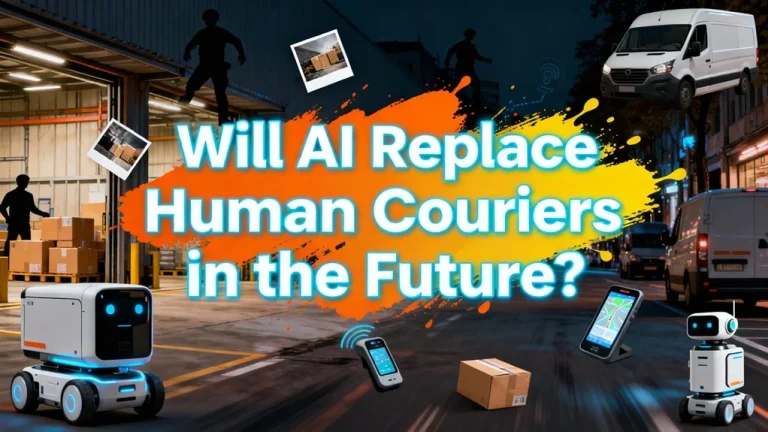
Will AI Replace Courier Jobs in the UK? What the Evidence Actually Shows
Artificial intelligence is changing how parcels move through the United Kingdom, but the headline fear — that couriers are about to be automated out of work — does not match what is happening on the ground. The UK still ships roughly five billion parcels a year, and almost every one of them still involves a human at some point in the chain. What AI is really doing is shifting where that human effort goes: away from repetitive planning and sorting, and toward judgement, exceptions and customer trust. This article looks at the real technology, the real numbers, and which courier roles are most and least exposed.
What AI Actually Does Inside UK Courier Operations Today
The most mature use of AI in UK logistics is route optimisation, and it is worth following the chain of cause and effect rather than treating it as a single benefit. A route engine reads live traffic, delivery density, drop time windows and vehicle telematics, then sequences stops to cut unnecessary mileage. Lower mileage reduces fuel burn and vehicle wear, which lowers the cost per drop, which in turn changes what a driver’s day looks like — more completed stops, less time deciding where to go next. The technology does not remove the driver; it removes the guesswork the driver used to carry.
Inside the depot, a Warehouse Management System (WMS) now coordinates intake, sortation and dispatch, while computer-vision scanners read labels faster and with fewer misreads than manual sorting. Fleet telematics and predictive maintenance watch engine and battery data to flag a failing part before it strands a van on a route. Dynamic dispatch reallocates jobs in real time when a driver runs late or a new collection lands. For international parcels, Natural Language Processing (NLP) reads addresses and customs paperwork, which matters more since Brexit added documentation to every cross-border shipment. Electronic Proof of Delivery (ePOD) closes the loop, giving the customer a timestamped confirmation the moment a parcel changes hands.
These systems connect to each other. A Transportation Management System (TMS) ties route planning to the WMS and to ePOD, so a delay flagged by telematics can trigger a customer notification without anyone picking up a phone. That connected flow — not any single clever algorithm — is where the efficiency actually comes from, and it is the same flow that carries a parcel from collection to your doorstep.
Which Courier Jobs Are Safest From AI?
The useful question is not “will AI take courier jobs” but “which tasks within courier work are exposed, and which are protected”. Automation targets tasks that are repetitive, rule-based and high-volume. It struggles with tasks that need physical dexterity in unpredictable settings, human judgement, or a person the customer can hold accountable. Mapping roles against that line gives a clearer picture than any single automation percentage.
| Exposure level | Courier tasks in this band | Why |
|---|---|---|
| Most exposed | Manual route planning, parcel sorting, standard status updates, first-line “where is my parcel” queries | High volume, rule-based, easy to model. Already being absorbed by WMS, route engines and chatbots. |
| Partly exposed | Standard urban doorstep delivery, depot loading, basic scheduling | Robots and automated loading handle the routine cases, but people still cover the edge cases and dense mixed rounds. |
| Least exposed | Rural and multi-drop rounds, high-value and age-verified goods, medical and time-critical deliveries, complaint recovery, driver supervision, vehicle and system maintenance | Unpredictable access, legal responsibility, physical judgement and customer trust are hard to automate and costly to get wrong. |
The pattern holds across the sector. Couriers who spend their day on predictable, identical drops sit closest to automation. Couriers who handle complexity — a locked gate, a fragile item, an elderly customer who needs the parcel carried inside, a delivery that has already gone wrong once — are doing exactly the work machines are worst at.
Warehouse Automation and Last-Mile Delivery Automate at Different Speeds
One of the most common mistakes in this debate is treating “the warehouse” and “the last mile” as if they will automate together. They will not, because the two environments could hardly be more different.

A warehouse is a controlled space. Lighting, layout, floor surface and traffic are all fixed, which is why automated storage, conveyors and picking robots work well there — and why the economics increasingly favour them. Even so, adoption is far from complete: industry analyses have long estimated that only a small share of warehouses worldwide are meaningfully automated, leaving the large majority still reliant on people. The last mile is the opposite: uncontrolled pavements, weather, pets, parked cars, stairs and unpredictable humans. That is why a picking robot is commercially viable today while a fully autonomous doorstep delivery in a typical British street remains a trial rather than a default.
The practical takeaway for anyone planning a courier career is that warehouse and sortation roles face automation pressure sooner, while last-mile delivery — especially anything non-standard — has a longer runway. Investment follows the controlled environment first because that is where the return is predictable. It is also why the hardest last-mile delivery challenges stay stubbornly human.
Autonomous Delivery on UK Streets: Robots and Drones
Autonomous delivery in Britain is real, but it is concentrated and specific rather than universal. On pavements, Starship Technologies has run the clearest example.

Its zero-emission robots launched commercially in Milton Keynes in 2018 and Northampton in 2020, and the company reports having passed nine million autonomous deliveries with a fleet of thousands of robots across several countries — the largest fleet of its kind. In late 2025 it began a partnership with Uber Eats, starting in Leeds, with the robots operating at Level 4 autonomy over short distances of up to two miles.
These robots do not replace the courier network so much as slot into a narrow niche: short, low-value, local drops in the kind of planned, low-traffic urban layout Milton Keynes was built around. Regulation is a live constraint. The Automated Vehicles Act 2024 addressed self-driving cars but did not cover pavement robots, and operators have pressed the Department for Science, Innovation and Technology for a clearer framework alongside the government’s wider AI ambitions. Royal Mail’s own trials with Starship and other partners point the same way — useful in the right setting, far from a general replacement.

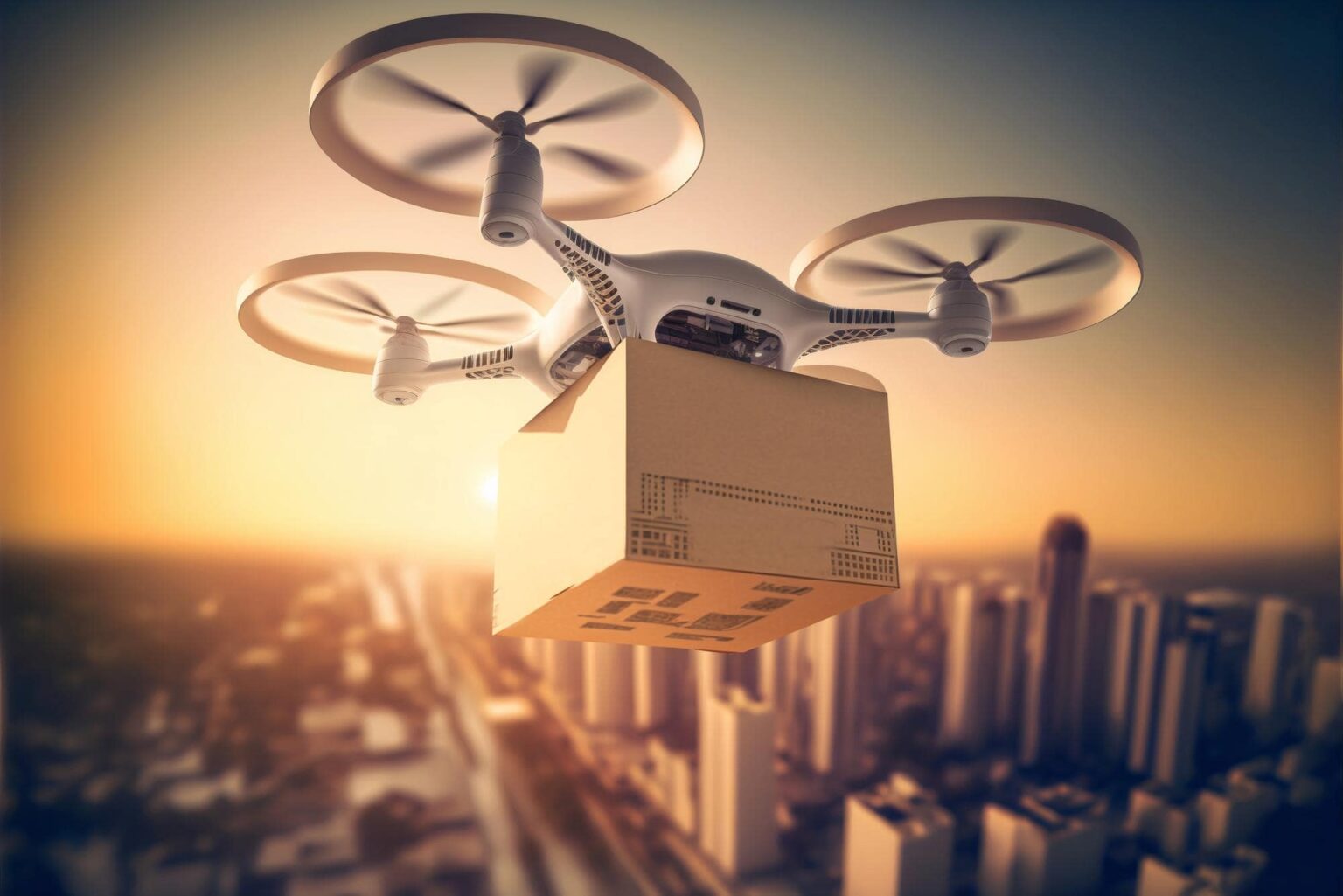
In the air, drone delivery sits earlier still. The Civil Aviation Authority (CAA) is running structured trials to safely integrate Beyond Visual Line of Sight (BVLOS) flights into UK airspace, selecting a handful of sandbox projects covering medical deliveries, infrastructure inspection and flights to remote areas. Royal Mail has trialled island deliveries in Orkney with partners including Skyports and Windracers, and Amazon Prime Air selected Darlington as an early UK drone site. The CAA’s own stated aim is to make routine BVLOS operations a reality around 2027 — which tells you drones are a near-future tool for remote and medical logistics, not a present-day replacement for the van on your street.

A Realistic UK Adoption Timeline, 2026–2035
Forecasts in this field have a habit of running ahead of reality. A widely cited McKinsey projection once suggested autonomous vehicles could handle the large majority of deliveries by 2025; that has plainly not happened, which is a useful warning against any confident date. With that caution, the likely direction of travel looks roughly like this.
| Period | Most likely state of play |
|---|---|
| 2026–2028 | AI route optimisation, telematics and ePOD become standard even at smaller operators. Pavement robots and drones expand within defined zones and remote routes. Human couriers remain the backbone of delivery. |
| 2029–2031 | Routine BVLOS drone corridors mature for medical and remote work. Warehouse automation deepens. Depot and sortation headcount shifts toward system oversight; last-mile headcount stays broadly stable. |
| 2032–2035 | Mixed fleets normalise: robots and drones handle standard, high-density and remote cases, while human couriers concentrate on complex, high-value and exception work. Roles are redefined rather than removed. |
The consistent theme is redefinition. Every credible projection points to courier work changing shape faster than it shrinks in headcount.
The Skills UK Employers Will Actually Pay For
As routine tasks move to software, the value of a courier shifts to what software cannot do. Employers are already paying more for people who can operate the technology rather than compete with it. The skills that hold their value fall into a few clear groups.
- Operating and troubleshooting route optimisation, telematics and dispatch software rather than being managed by it.
- Handling exceptions — failed deliveries, complaints, fragile or age-restricted goods — where judgement and accountability matter.
- Supervising mixed teams of drivers, robots and automated systems, including basic oversight of autonomous units.
- Data literacy: reading delivery performance, first-time success rates and route metrics well enough to act on them.
- Customer-facing skill in the moments that build trust, which is still the hardest thing for any automated system to fake.
A courier who can read a fleet dashboard, resolve a difficult drop and keep a customer loyal is worth more in an automated network, not less. That is where wage growth in the sector is concentrating, and it is the same career path Pegasus Couriers has always run — drivers moving up into supervisory and management roles.
The Economics, Told Honestly
The commercial case for automation is real, but it is easy to overstate. On the demand side, the UK’s parcel market is large and structurally busy — roughly five billion parcels a year according to the Pitney Bowes Parcel Shipping Index — which is exactly why operators invest in efficiency. Electric and autonomous units carry lower running and maintenance costs than diesel vans over their lifetime, and route optimisation cuts fuel by trimming avoidable mileage. Independent forecasts put the UK last-mile market on a steep growth curve, which keeps that investment flowing.
The costs, though, are front-loaded and often understated. Autonomous hardware, sensors, software integration and the upgrade of legacy IT all demand capital before any saving appears. That is why automation spreads first where volumes are high and routes are predictable, and why smaller operators sensibly pilot one capability — usually route optimisation or ePOD — before committing further. The savings are genuine; the “AI is always cheaper” framing is not.
Why Full Automation Is Still Years Away
Several hard barriers sit between today’s tools and a fully automated network, and they explain the gap between marketing claims and depot reality.
Data quality comes first: route engines and predictive systems are only as good as the address, telematics and delivery data feeding them, and clean data at scale is harder to maintain than it sounds. Skilled staff are scarce, and integrating AI with older dispatch and warehouse systems is slow and expensive. Capital limits how fast smaller firms can scale a pilot into a fleet-wide rollout.
Then there is the regulatory and security layer. Automated systems handle customer addresses and delivery patterns, which brings the UK General Data Protection Regulation (GDPR) and the Information Commissioner’s Office (ICO) into scope, alongside a wider cyber-security burden as more of the operation runs on connected software. Vehicle-facing rules from the Driver and Vehicle Standards Agency (DVSA), workplace safety duties overseen by the Health and Safety Executive (HSE), and the CAA’s airspace framework all shape what can be deployed and when. None of these is a reason automation stalls — but together they explain why it advances in careful steps rather than a single leap.

Frequently Asked Questions
Will AI delivery cost more or less than human couriers?
Over a full lifecycle, automated and electric units tend to cost less to run than diesel vans, mainly through lower fuel and maintenance. The catch is the upfront investment in hardware, software and IT upgrades, which takes years to pay back. For most UK operators today, a hybrid model — humans plus targeted automation — is cheaper than either extreme.
How will customers adapt to dealing with robots instead of people?
Evidence from live services suggests customers care far more about reliability than about whether a human or a machine turns up. Accurate tracking, tight delivery windows and easy access to a real person when something goes wrong are what build trust. Automation works best for routine drops; human contact still wins the moments that go wrong.
What training helps couriers move into higher-paid roles?
The strongest options build technology and supervisory skills on top of delivery experience. Skills Bootcamps in digital and logistics skills, City & Guilds and BTEC logistics qualifications, and training from bodies such as the Road Transport Industry Training Board all map well onto warehouse supervision, fleet coordination and dispatch roles. Data literacy and customer-recovery skills are worth adding to any of them.
Which countries are adopting AI courier services first?
Markets with dense cities, clear regulation and strong digital payments tend to move first — the UK, Singapore and South Korea are common examples. The UK’s structured CAA drone trials and live pavement-robot deployments put it among the more advanced testing grounds, even though nationwide rollout remains some way off.
So will AI replace courier jobs or not?
Not wholesale. The credible picture is transformation, not elimination: routine planning and sorting move to software, while human couriers concentrate on complex, high-value and exception work that automation handles poorly. The couriers most at risk are those doing only the most repetitive tasks; the ones who add technical and customer judgement are becoming more valuable, not less.

Martin Smith is an industry expert with more than 30 years’ experience in the parcel delivery and logistics. Martin is considered an industry professional in the UK Courier World.

